For travellers planning a safari in South Africa, one question consistently determines the quality of the entire experience: how long should a safari be?
The answer directly impacts wildlife sightings, pace, and overall value, particularly when comparing options across South Africa or understanding how structured journeys like Live Wild Plus are designed. At Bundox Safari Co., safari duration is treated as a core part of the experience, and travellers can also refine their plans or enquire directly via the contact page.
Safari duration is often misunderstood.
- Too short, and the experience feels rushed.
- Too long without structure, and it loses momentum.
- The right balance is not about adding nights, but about how time in the bush is designed and experienced.
Safari time is not simply about nights on a calendar. It is about how much meaningful time is spent in the field, how ecosystems reveal themselves, and how the experience transitions from observation to immersion.
Key Takeaways
- The ideal safari duration in South Africa is typically 5 to 7 nights for a complete experience
- 3 nights is the minimum functional stay, but still limited in depth
- 2 nights is operationally inefficient due to travel time vs safari time
- Multi-lodge safaris increase diversity, pacing, and overall value
- Structured journeys such as
our Packages demonstrate how duration enhances experience quality
Why 2 Nights Is Rarely Enough
A 2-night safari is often positioned as a quick escape, but in practice, it compresses the experience to a point where it becomes operational rather than immersive.
Arrival into the Greater Kruger involves transfers, check-in, and orientation. By the time guests are settled, only one meaningful game drive is typically completed on day one. Day two offers a morning and afternoon drive, followed by departure, after a quick morning game drive (when possible) on day three.
The result is not unsafe or poorly run, but structurally limited. Wildlife encounters feel opportunistic rather than contextual, and the overall experience lacks depth. For travellers investing in a long-haul journey, this creates a mismatch between expectation and delivery.
What You Experience Over 4, 5, and 7 Days
3 Nights: The Entry-Level Safari
A 3-night safari begins to function as a complete experience. It allows for multiple game drives, exposure to different times of day, and enough time to settle into the rhythm of the bush.
However, it remains a surface-level experience. Wildlife sightings can still feel inconsistent, and there is limited opportunity to build a deeper understanding of animal behaviour or landscape dynamics.
4 Nights: The Optimal Balance
At 4 nights, the safari becomes more structured and reliable. Repeated exposure to the same ecosystem allows guides to build continuity around sightings, tracking patterns, and movement.
This is where safari duration in Kruger begins to deliver meaningful return. The experience shifts from simply seeing wildlife to understanding it, and the pace becomes more intentional rather than reactive.
A well-designed 4-night itinerary, such as the Live Wild Package, demonstrates how a shorter safari can still deliver depth when structured correctly across locations like Explorer Camp and Khanya Safari Lodge, combining classic game drives with conservation experiences.
6 Nights: Full Immersion
At 6 nights, the safari evolves into a complete journey. There is time not only for consistent wildlife encounters, but also for variation in experience.
This is where itineraries such as Live Wild Plus become relevant. A multi-location structure introduces different environments, conservation engagement, and regional exploration, all within a single journey.
The result is a safari that feels layered, not repetitive.
Travel Time vs Safari Time in Greater Kruger
One of the most overlooked aspects of safari planning is the ratio between travel time and actual safari time.
Safari operations follow a fixed rhythm. Morning and afternoon drives are the core of the experience, and missing even one cycle has a measurable impact on overall value. On shorter stays, logistics such as transfers and check-in reduce the number of available game drives, compressing the experience further.
A well-designed itinerary ensures that time in transit does not outweigh time in the field. This is why duration and structure must be aligned from the outset.
Combining Lodges for a Better Safari Experience
Extending a safari is not only about adding nights. It is about improving how those nights are experienced.
Combining lodges introduces variation in landscape, wildlife dynamics, and atmosphere. A journey that moves between camps creates a natural progression, rather than repeating the same experience in one location.
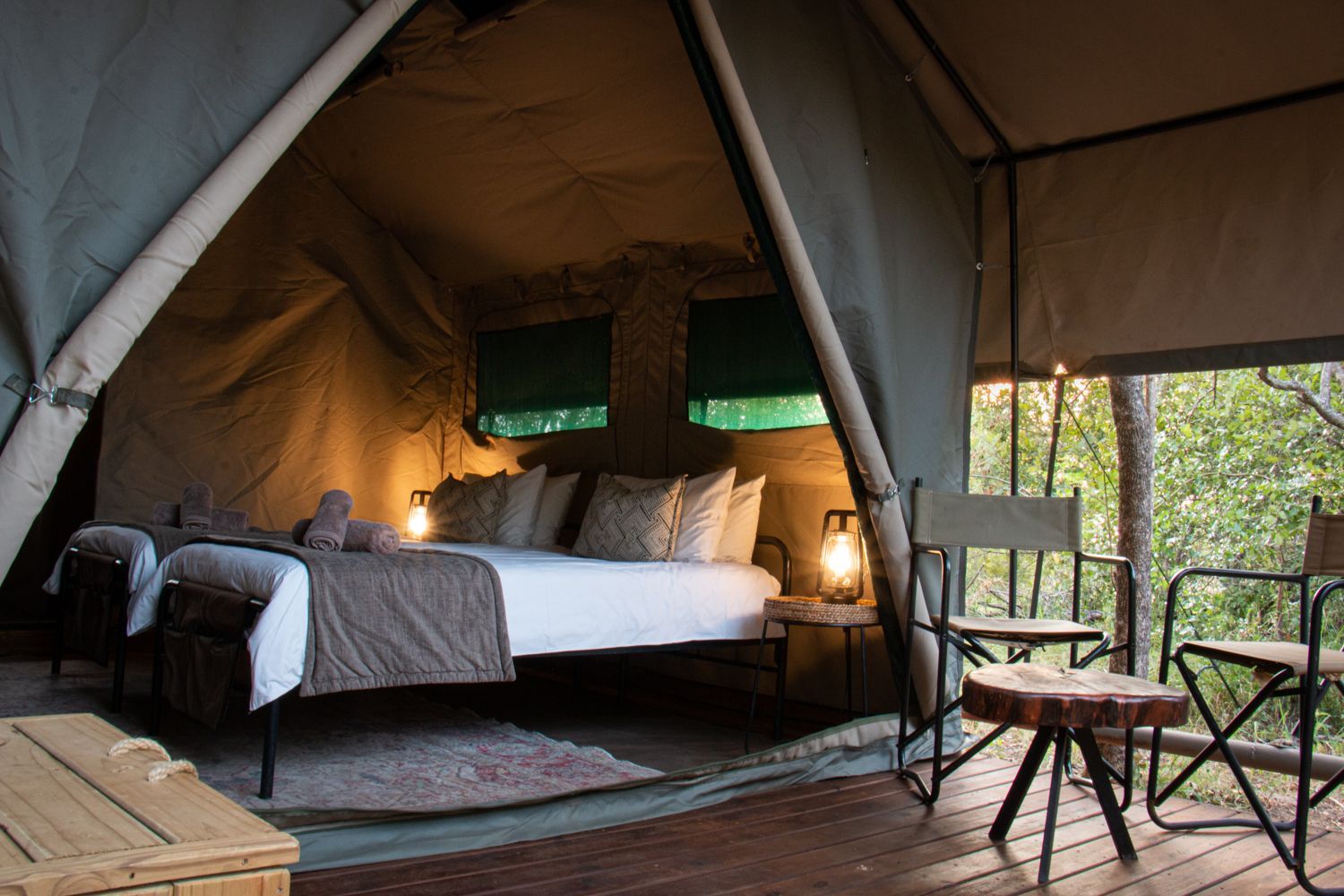
Within Bundox Safari Co., this may include a combination of classic tented safari environments, conservation-focused camps, and more refined lodge settings. Each transition adds context and depth, allowing the experience to build rather than plateau.
How Bundox Structures Multi-Day Safaris
At Bundox Safari Co., safari duration is designed around experience layering rather than fixed packages.
A typical multi-day safari progresses through three phases. The first is arrival and orientation, where guests settle into the environment and initial drives begin. The second is the core safari phase, where wildlife encounters become more consistent and immersive. The third expands beyond traditional game drives, introducing conservation, landscapes, and broader regional experiences.
This structure is clearly reflected in journeys within our Safari Packages, where multiple locations, guided experiences, and conservation elements are integrated into a single itinerary.
The outcome is a safari that aligns with what high-value travellers actually seek: authenticity, depth, and a pace that allows the experience to unfold naturally.
What the Right Safari Duration Actually Means
Safari duration is not a preference. It is a structural decision that defines the quality of the entire journey.
When travellers search how long a safari in South Africa should be or best safari length, they are ultimately asking how to maximise value, experience, and connection to the environment.
At Bundox Safari Co., the answer is consistent: the right safari is not shorter or longer, it is correctly structured.
If you are refining your plans or evaluating options, you can explore more through
Bundox Safari Co. or start a direct conversation via our
contact page.
Frequently Asked Questions
How many days do you need for a safari in South Africa?
A minimum of 3 nights is ideal for a functional safari, but 5 to 7 nights is recommended for a complete experience.
Is 3 days enough for a Kruger safari?
Three days (typically 3 nights) allows for a structured introduction, but remains limited in depth and consistency.
What is the ideal length for a luxury safari?
The ideal length is 5 to 7 nights, particularly when structured across multiple locations for variation and pacing.
How long should a first-time safari be?
For first-time travellers, 5 nights offers the most effective balance between immersion and efficiency.
Can you do a safari in 2 days?
It is possible, but not recommended. The experience is constrained by logistics and does not reflect the full value of a Greater Kruger safari.

Subscribe to Our Newsletter